
Simplifying AI threat intelligence into a frictionless account protection system for creator brands.
My Role(s)
Brand & UI/UX Designer
Tools
Figma, Adobe Illustrator, Photoshop, ChatGPT
Industry
AI-Powered / Cybersecurity
Impacts
Complete visual identity
(Logo, color tokens, typography, UI kit)
25+ responsive screens for web and mobile
Core Flows
4 primary workflows
(Scan - Detect - Review - Takedown)
.png)
Overview
PhishSpot.ai is an AI-powered trust layer that detects fake profiles, impersonation accounts, and social media phishing threats, built for everyday creators, influencers, and small brands on Instagram, TikTok, and Facebook.
I owned the end-to-end product design and foundational brand direction.
PROBLEM
Everyday creators had no way to understand or act on AI security signals because existing tools dumped raw technical data with no next step.
Diagnosis Without Resolution
Existing platforms flag fake accounts but offer no actionable next step, leaving users panicked and unsupported.
Enterprise Complexity
Traditional cybersecurity tools use dense technical jargon (e.g., Vector Mismatch: 0.84), confusing non-technical creators.
How do you make invisible, deep-tech AI security signals usable to someone with zerosecurity background?
RESEARCH
.png)
Competitor Gaps & Market Opportunity
Enterprise Protection (ZeroFox, BrandShield):
Overwhelming dashboards, required sales calls, expensive enterprise contracts.
Native Social Reporting (Instagram, TikTok):
Slow, buried in settings menus, frequently ignored without legal language.
PhishSpot Rationale:
Combine consumer-grade simplicity with deep automated threat detection
THE SOLUTION
I designed a flow that turns complex, invisible AI security signals detection straight into a plain-language verdict and one-click resolution.
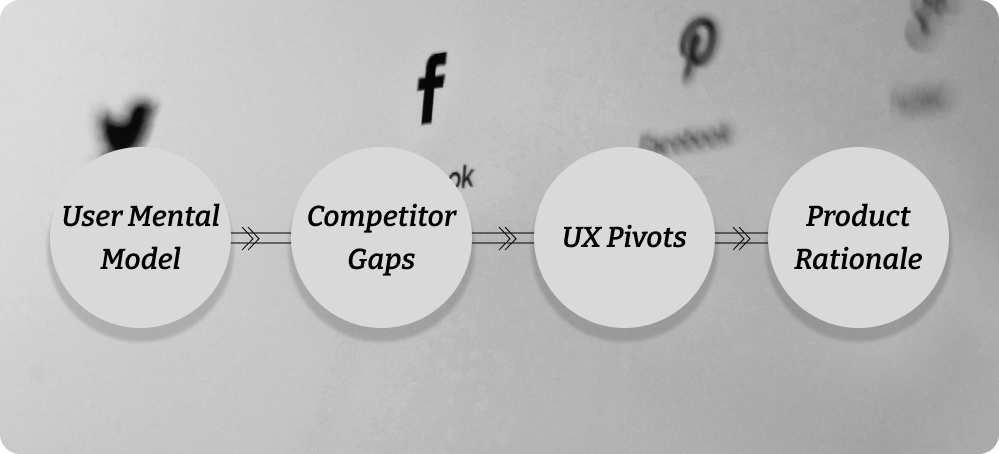
Key UX Pivots
Removing Account Walls:
Forcing registration before scanning caused high bounce rates. Moving the handle search directly to the landing page increased engagement.
Designing for Wait Time:
AI scanning takes 10 to 15 seconds. Replacing static loading spinners with a live status visualizer reduced user drop-off during processing.
The UX Solution
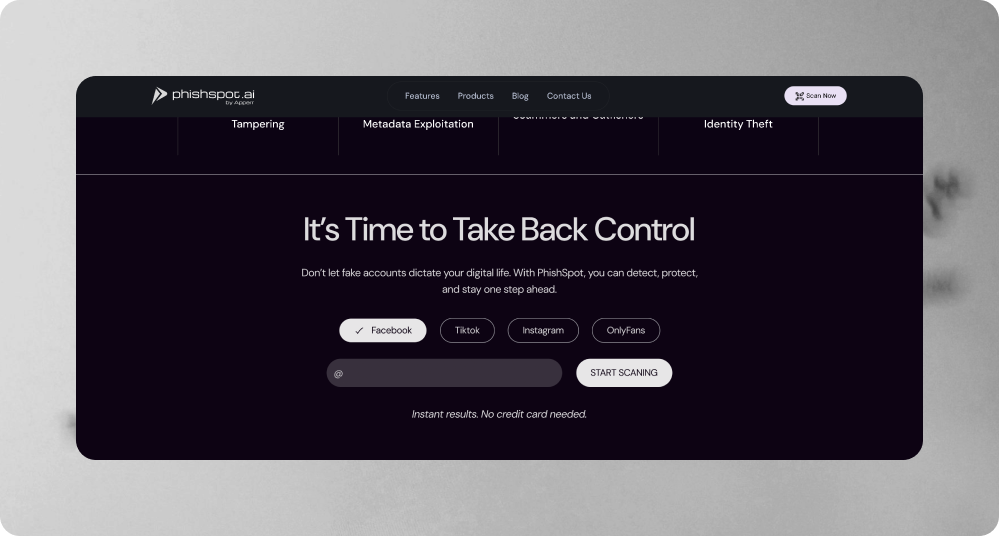
1. Instant Scan Entry
- Allows creators to run an immediate threat check by entering a handle (
@username) or uploading an image. - Requires zero setup to view initial threat levels.
.png)
2. Live Scan Visualizer
- Replaces static loading indicators with an interactive radar displaying real-time AI checks ("Checking Bio Metadata... Analyzing Profile Picture Vectors...").
- Builds user trust by transparently demonstrating backend analysis.
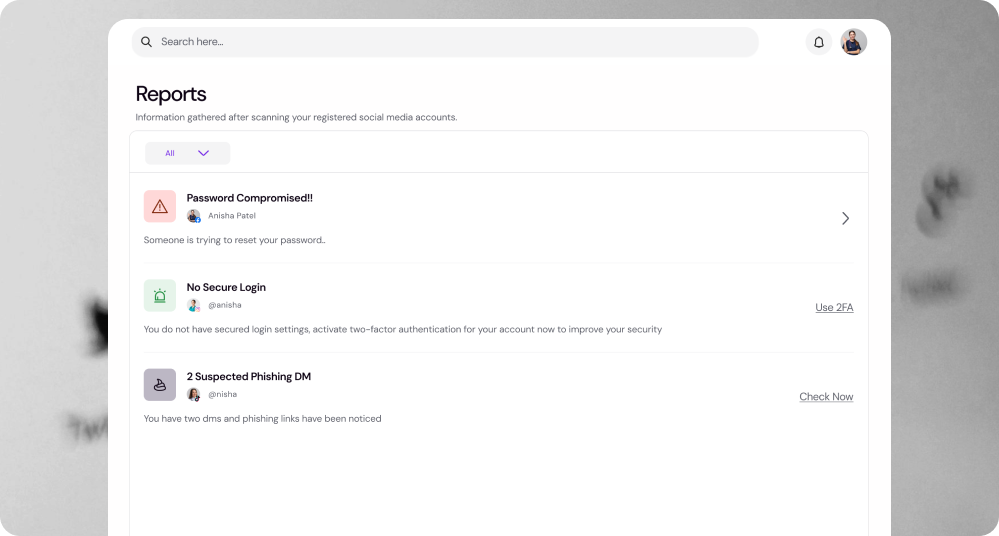
3. Plain-Language Threat Verdicts
- Translates raw telemetry into clear visual risk tags (Password Compromised, 2 Suspected Phishing DM).
- Replaces complex reporting forms with pre-filled legal takedown notices.
- Enables users to send formal takedown requests directly to social networks in a single tap.
Brand Identity & Design System
Constructed a cohesive visual identity and structured UI library in Figma:
- Visual Identity: Modern geometric logo blending a protective shield with digital network nodes.
.png)
- Color System: Electric Purple (trust and authority) paired with Tangerine Blaze (modern tech accent) and Alert Red (threat states).
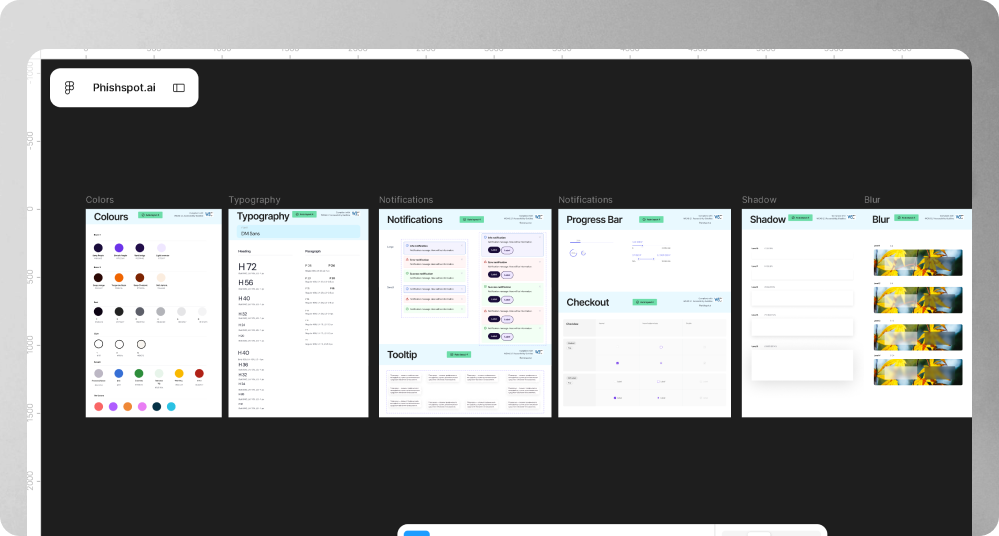
- Figma UI Kit: Full Auto-Layout 5.0 structure, semantic color variables, responsive typography scales, and modular button/card states.
Key Design Takeaways
- Progress Transparency Builds Confidence: Showing the active steps behind AI processing validates platform accuracy and reduces perceived wait times.
- Action Over Alarm: Security software must focus on resolution, not just alerting users to problems.
- Plain Copy Converts: Replacing technical jargon with clear conversational copy transforms user panic into confident action.
%20(1).gif)
.gif)
With PhishSpot.ai, we successfully transformed complex, invisible AI security signals into an intuitive defensive shield for everyday creators and brands. By prioritizing progressive disclosure and clear, actionable mitigation steps over technical anxiety, the design successfully shifted digital identity protection from a reactive panic into proactive, effortless control.
You can also see...
Apperr Website
View ProjectTrialClinIQ
View Project