
Redesigning and engineering a High-Performance Digital Flagship for Apperr Designs
Impacts
+25% Lift in High-Ticket Inbound Pipeline Conversion
Post-launch event-tracking pipelines monitored a direct quarter-over-quarter spike in qualified corporate contact form submissions
+40% Increase in Organic Visitor Funnel Traffic
Google Search Console logs documented a rapid surge in relevant keyword search indexing and landing page clicks, proving a significantly expanded market reach.

Overview
Apperr Designs is an on-demand tech partner that provides elite technical and design services like Product Design, CTO-as-a-Service, and custom AI implementations, helping founders build digital products through web, mobile, and AI solutions.
In this project, I led the redesigned and build Apperr’s Website, From Figma to Webflow Execution
PROBLEM
The legacy platform suffered from an identity mismatch: a team capable of building advanced AI infrastructures was represented by a low-trust digital storefront. This translation gap resulted in high drop-off rates along the primary sales funnel.
Low Conversion
Steady traffic wasn't turning into leads; CTAs were unclear and the journey had no strong pull toward action.
Poor Design Implementation
Traditional Figma-to-Developer delivery models were introducing structural bloat, delaying launch speed, and diluting interaction polish.
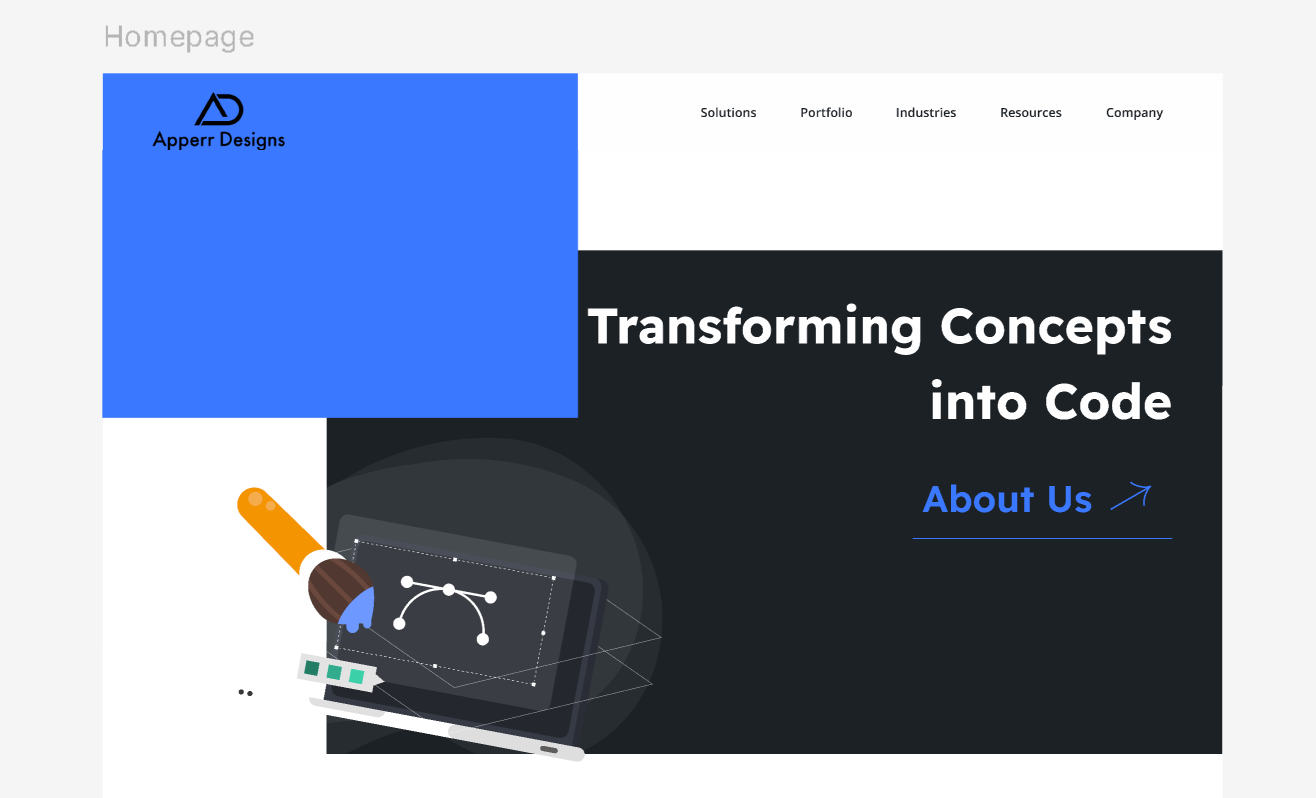
How do you close the gap between what a tech partner can actually build and how that capability reads online?
RESEARCH
Key insight: Upon deeper website audit, I decided the issue was not only visual but also more of structural.
I also conducted brands and competitor's research, mapped out the information architecture for the new structure.
However, the best way to close the gap for good was to own both sides of the process, design and development, instead of handing polished Figma files to someone else to interpret.
THE SOLUTION
I optimized the entire delivery pipeline. I utilized a strict component-driven workflow to transition fluidly from the design canvas directly into production code.
1. Architecting the Layout Engine in Figma
To ensure a flawless technical export, I built the entire interface using native web mechanics inside Figma.
- Auto Layout Mastery: Every component, block, and viewport card was engineered using nested Auto Layout modules, establishing a fluid responsive grid before writing code.
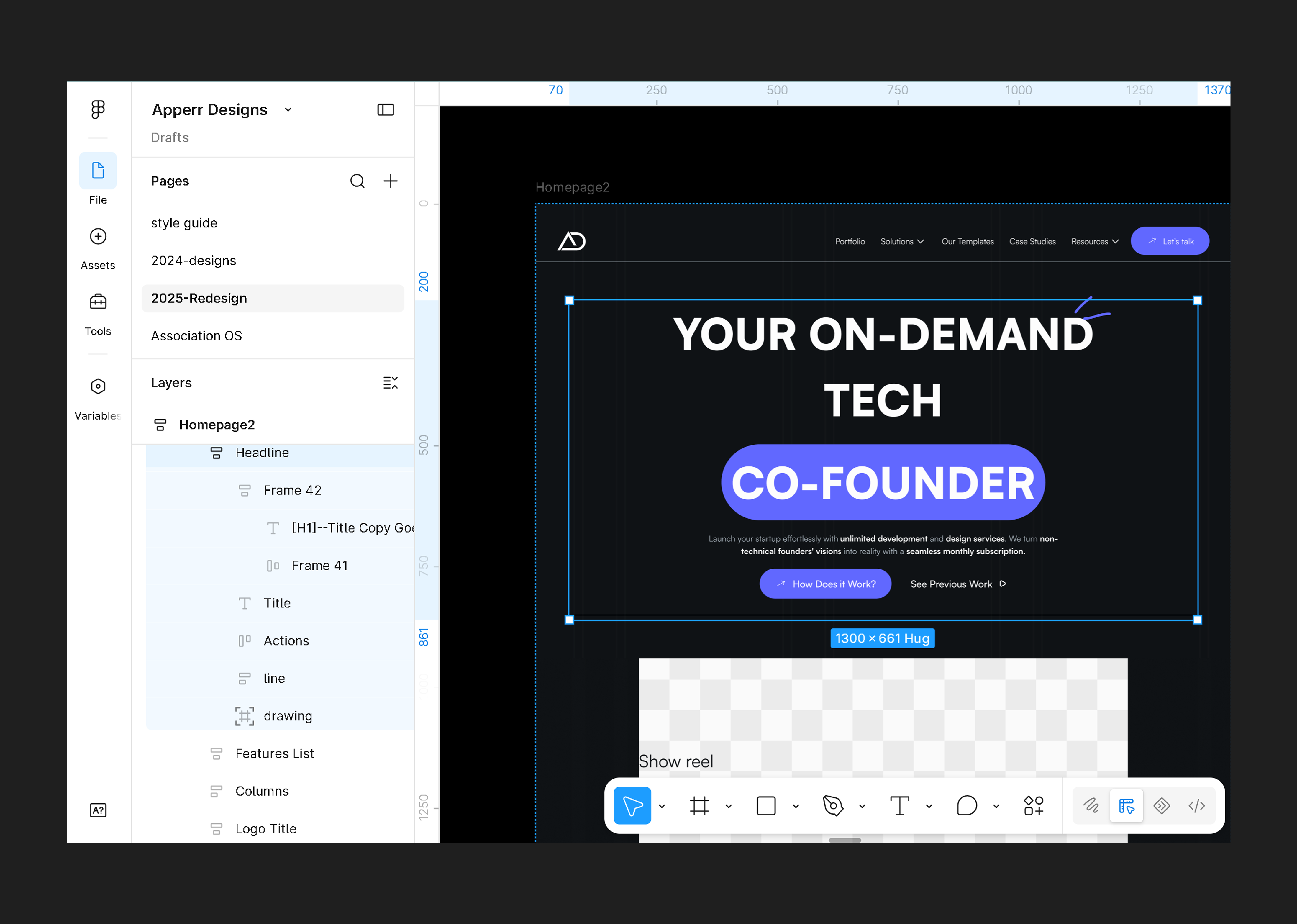
- Semantic Tagging: Prior to migration, I explicitly assigned native HTML tags (e.g.,
<header>,<section>,<nav>,<container>) to layers directly inside the Figma workspace.
- Global Variables: Mapped global typography tokens, fluid padding scales, and color architecture using Figma variables to mirror exact web styling properties.
.png)
A design is only as good as its production execution. I audited the final codebase to ensure compliance with elite web performance standards directly tied to conversion health:
- First Contentful Paint (FCP): Optimized down to 0.9 seconds, completely mitigating early-stage user bounce rates.
- Cumulative Layout Shift (CLS): Engineered scroll-triggered micro-interactions natively in Webflow manipulating hardware-accelerated CSS properties (
transformandopacity). This yielded a near-perfect 0.001 stability rating, eliminating visual layout shifts.
- Accessibility (A11y): Enforced a 94/100 benchmark score through proper contrast ratios, structural screen-reader hierarchies, and clean DOM nesting.


.gif)
This project taught me that great design doesn't end at the canvas. Bridging the gap between design intent and production output is a skill in itself and one I now bring to every project. Taking ownership of both design and development gave me a sharper eye for what's buildable, what's performant, and what actually converts.
You can also see...
TrialClinIQ
View ProjectGoSendeet
View Project