
Designing an Urban Logistics Engine that Simplifies Local Delivery Booking and Real-Time Parcel Tracking for individuals and local businesses
My Role(s)
Brand & UI/UX Designer
Tools
Illustration, Product Design, Visual Design, Stitch
Industry
Courier/Delivery/B2C
Impacts
Cut booking drop-off by 35%
by replacing a multi-page setup form with a 3-tap instant price estimator on the landing page.
Streamlined booking conversion
by replacing a 7-step shipping form with a 3-tap instant price estimator
.png)
Overview
Gosendeet is an all-in-one (airbnb) logistics and delivery management platform that empowers businesses to set dynamic pricing, manage services, and scale last-mile operations efficiently.
I designed the platform experience from concept through to full UI production, transforming clunky shipping procedures into an intuitive booking and real-time tracking engine.
PROBLEM
Sending a package meant contacting or checking through multiple logistics companies just to compare prices.
Platform Switching
Completing a single booking meant jumping between different logistics platforms, each with its own flow, format, and experience.
Inconsistent Delivery Experiences
Every provider operated differently, making it impossible for businesses to deliver a reliable, predictable experience to their customers.
How do you make fragmented, inconsistent courier providers feel like a single trustworthy service?
RESEARCH
To build a delivery experience that local merchants and everyday senders can rely on, I structured a research process focused on user anxiety, field observations, and competitor workflows.
1. Merchant & Sender Field Research
I interviewed 12 frequent senders including local e-commerce vendors, boutique owners, printing press, and everyday users to understand where current delivery tools fail them.
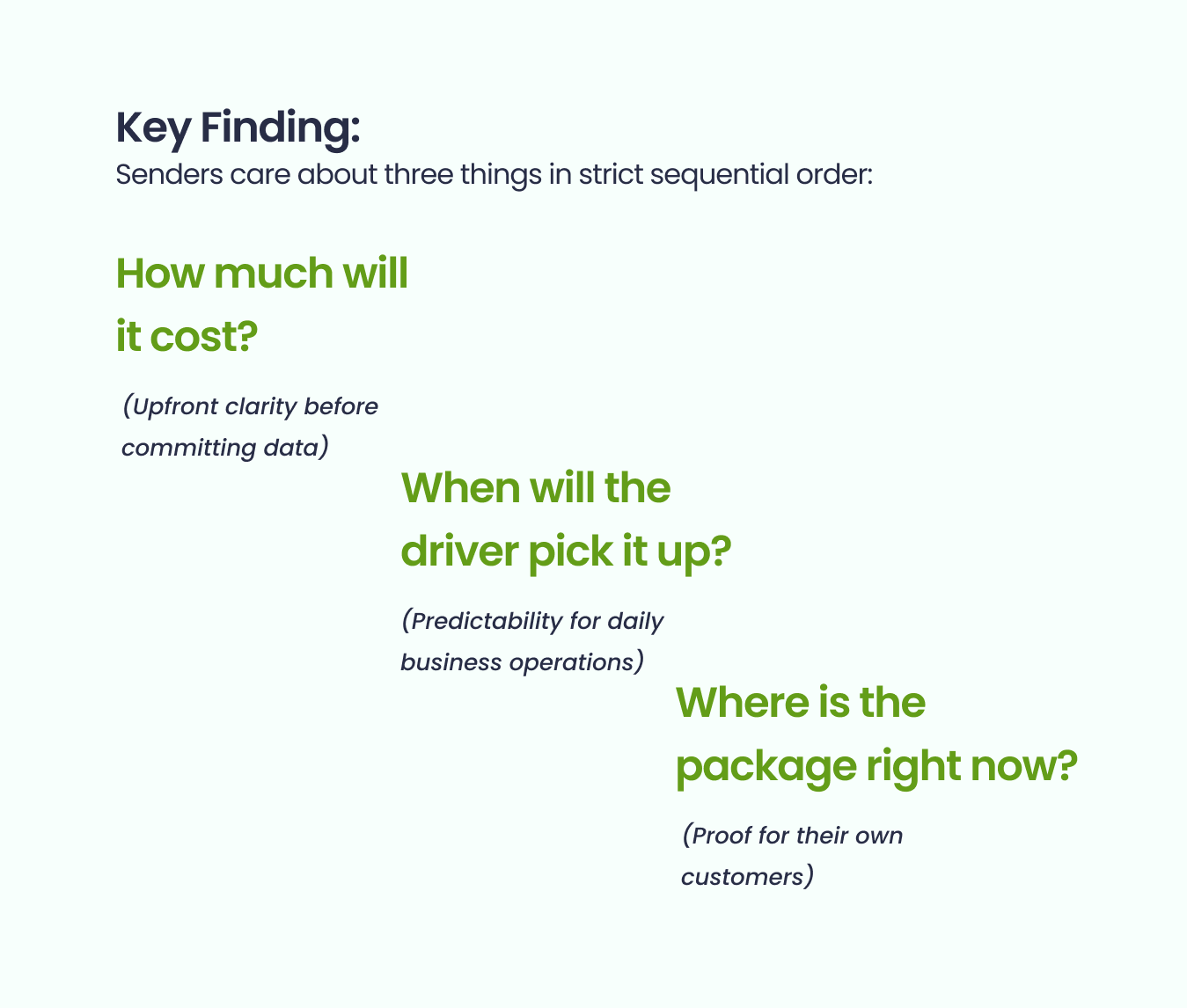
2. Competitive UX Audit
I evaluated existing local and regional shipping tools across three main vectors:
- Legacy Couriers (DHL, FedEx): Highly reliable, but require commercial accounts, exact volumetric weights, and dense shipping jargon.
- Local Driver Delivery: Fast, but lack specialized parcel features like multi-stop drop-offs, standardized price, or formal delivery receipts.
- GoSendeet Opportunity: Build an interface that offers rideshare-level speed and visual simplicity, combined with commercial-grade parcel tracking.
The UX Solution
1. 3-Tap Instant Price Estimator
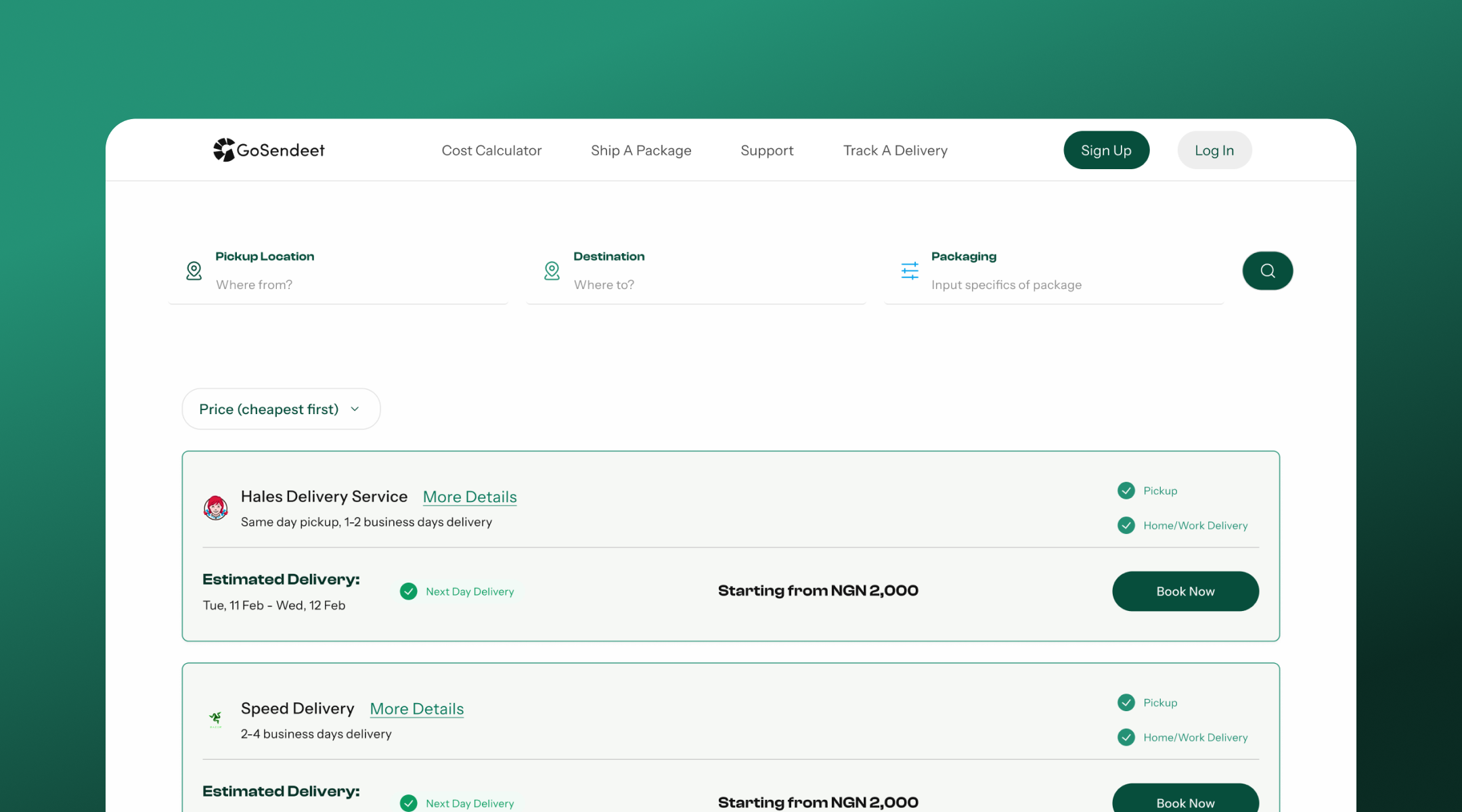
I designed a single-card estimator on the home view that lets senders calculate rates instantly.
- Simple Inputs: Senders enter pickup/drop-off locations and tap a visual package size tile (Small, Medium, Large).
- Zero Hidden Fees: Displays an itemized breakdown (Base Rate + Distance + Priority Surge) before payment.
2. Smart Route & Courier Matching
Integrated real-time mapping to give users immediate feedback on courier availability and route geometry.
- Live Route Geometry: Displays the optimal driving path alongside estimated pickup and arrival times based on traffic.
- Parcel Details Drawer: Allows senders to add delivery notes (e.g., "Leave with front desk" or "Fragile handling") in a clean expandable card.
3. Real-Time Live GPS Tracking Hub
Replaced static tracking pages with a live map view accessible via a shared web link.
- Live Map Tracking: Senders and recipients watch the assigned driver move in real-time.
- Direct Communication: Built-in 1-tap call and message buttons to connect directly with the courier without revealing personal phone numbers.
Key insight:
The hardest problem wasn't the interface, it was pricing. Every logistics company calculated delivery costs differently, so a trustworthy comparison view meant standardizing something that wasn't standardized behind the scenes.
Studied how Airbnb aggregates multi-provider options into one trustworthy comparison view,and how food-delivery and e-commerce platforms present multi-vendor choices without exposing operational complexity.
Ran multiple alignment sessions with stakeholders to balance user expectations, partnerrequirements, and business goals.
THE SOLUTION
To build a delivery experience that local merchants and everyday senders can rely on, I structured a research process focused on user anxiety, field observations, and competitor workflows.
My Output
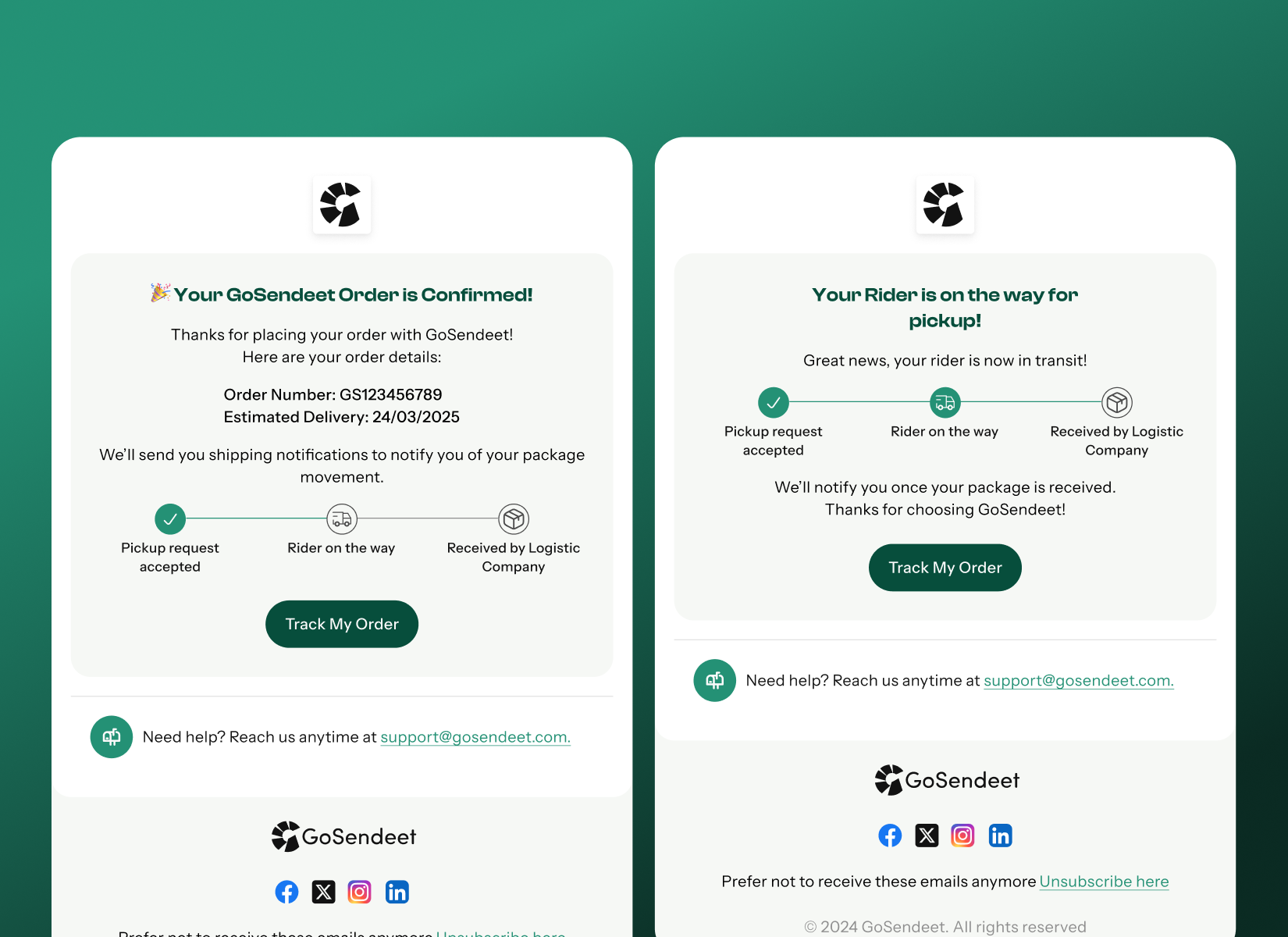
1. Built a three-step in a single flow
Discover: Users enter delivery details once.
Compare: The platform retrieves rates from multiple partners in a standardized format.
Deliver: GoSendeet orchestrates fulfillment through the chosen provider's API, end to end.
2. Owned the full brand identity alongside product, logo, typography, and visual language, so the unified experience read as one product, not a directory of partners.
3. Booking, comparison, tracking, and management workflows end-to-end, and the multi-provider comparison model (the most complex challenge on the project) was validated through close stakeholder collaboration and approved for development without major redesigns.
.gif)
Marketplace design is deceptively hard. The interface looks simple but the decisions behind it aren't. Understanding the business model, the pricing logic, and the partner constraints is what makes the difference between a comparison experience users trust and one they abandon.
You can also see...
Apperr Website
View ProjectTrialClinIQ
View Project